
PCOS and PCOD Difference: Understanding the Key Facts Every Woman Should Know
Many women hear the terms PCOS and PCOD used interchangeably, but they are not exactly the same. There are important differences in the causes, symptoms, severity, and long-term impact of these diseases but both of them affect the ovaries and hormonal balance. By understanding the difference between both of these diseases can help women take the right steps toward diagnosis, treatment, and lifestyle management.
What is PCOD?
PCOD (Polycystic Ovarian Disease) is a condition in which the ovaries release many immature or partially mature eggs. These eggs turn into cysts over time and cause the ovaries to enlarge. This mainly happens due to hormonal imbalance.
In PCOD, the ovaries produce higher amounts of male hormones (androgens) than normal. This hormonal imbalance can interfere with ovulation and may cause irregular menstrual cycles.
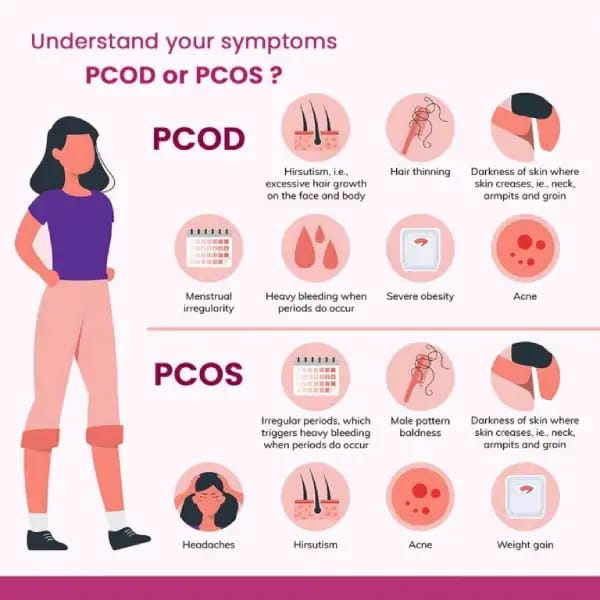
Common Symptoms of PCOD:
. Irregular or delayed periods
. Heavy menstrual bleeding
. Weight gain
. Acne and oily skin
. Hair thinning or hair fall
PCOD is relatively common and is considered less severe than PCOS. With proper lifestyle changes such as a healthy diet, regular exercise, and stress management, many women can manage PCOD effectively without major medical intervention.
What is PCOS?
PCOS (Polycystic Ovary Syndrome) is a more serious metabolic and endocrine disorder. It not only affects the ovaries but also the body’s overall hormonal system. PCOS is linked to insulin resistance, which means the body cannot use insulin properly. As a result insulin level of females increase which can stimulate the ovaries to produce excess male hormones.
Unlike PCOD, PCOS is a syndrome, meaning it involves a group of symptoms affecting multiple systems in the body.
Common Symptoms of PCOS:
. Highly irregular or absent periods
. Excess facial and body hair (hirsutism)
. Severe acne
. Obesity or difficulty losing weight
. Fertility problems
. Dark patches on the skin (especially around the neck)
. Hair loss from the scalp
PCOS can increase the risk of serious health conditions such as type 2 diabetes, heart disease, high blood pressure, and endometrial cancer if left untreated.
Major Differences Between PCOS and PCOD
Although both conditions involve cysts in the ovaries and hormonal imbalance yet they differ in several key ways.
- Nature of the Condition:
. PCOD is a disorder related mainly to the ovaries.
. PCOS is a metabolic and hormonal syndrome affecting the entire endocrine system. - Severity:
. PCOD is generally less severe and more manageable with lifestyle modifications.
. PCOS is more complex and may require long-term medical treatment. - Ovulation:
. In PCOD, ovulation may still occur, though irregularly.
. In PCOS, ovulation is often severely disrupted or absent. - Fertility Impact:
. Women with PCOD can usually conceive with minimal treatment.
. Women with PCOS may face greater difficulty getting pregnant and may require medical assistance. - Metabolic Issues:
. PCOD usually does not involve major metabolic complications.
. PCOS is strongly linked to insulin resistance, diabetes, and cardiovascular risks.
Causes of PCOS and PCOD
PCOS and PCOD are influenced by hormonal imbalance, but PCOS has a stronger link to genetic and metabolic factors.
Possible Causes Include:
. Genetic predisposition
. Insulin resistance
. Obesity
. Sedentary lifestyle
. High levels of stress
. Unhealthy eating habits
While the exact cause is not fully understood, early diagnosis and proactive management can significantly reduce complications.
Diagnosis:
Doctors usually diagnose PCOS and PCOD through:
. Pelvic ultrasound
. Blood tests to measure hormone levels
. Evaluation of menstrual history
. Assessment of physical symptoms
In PCOS, doctors often use specific medical criteria that include irregular periods, high androgen levels, and polycystic ovaries on ultrasound.
Treatment and Management:
There is no permanent cure for PCOS or PCOD, but both conditions can be managed effectively.
Lifestyle Changes:
. Maintain a healthy weight
. Follow a balanced, low-sugar diet
. Exercise regularly (at least 30 minutes daily)
. Manage stress through yoga or meditation
. Get adequate sleep
Medical Treatment:
. Hormonal birth control pills to regulate periods
. Insulin-sensitizing medications (especially for PCOS)
. Fertility treatments if pregnancy is desired
. Anti-androgen medications to reduce excess hair growth
Adopting these lifestyle changes can alone greatly improve PCOD symptoms. However, PCOS often requires a combination of medical treatment and lifestyle management.
Can PCOS or PCOD Be Prevented?
Maintaining a healthy lifestyle from an early age can reduce the risk and severity because these conditions cannot always be prevented due to genetic factors. Early diagnosis plays a key role in preventing long-term complications.
Regular health check-ups and awareness of menstrual health are essential for early detection.
Conclusion
Though PCOS and PCOD share similarities, they are not the same condition. PCOD is a common ovarian disorder that can often be managed with lifestyle adjustments. PCOS, on the other hand, is a more complex hormonal and metabolic syndrome that may require medical intervention and long-term management.
By understanding the difference between both of these diseases women can take the right steps like timely treatment, adopt healthier habits, and take control of their reproductive and overall health. If you experience irregular periods, unexplained weight gain, or symptoms of hormonal imbalance, consulting a healthcare professional is the best step toward proper diagnosis and care.
Awareness is the first step toward prevention and better health.